
Fighting Food Insecurity with Solutions Designed for Homebound Seniors
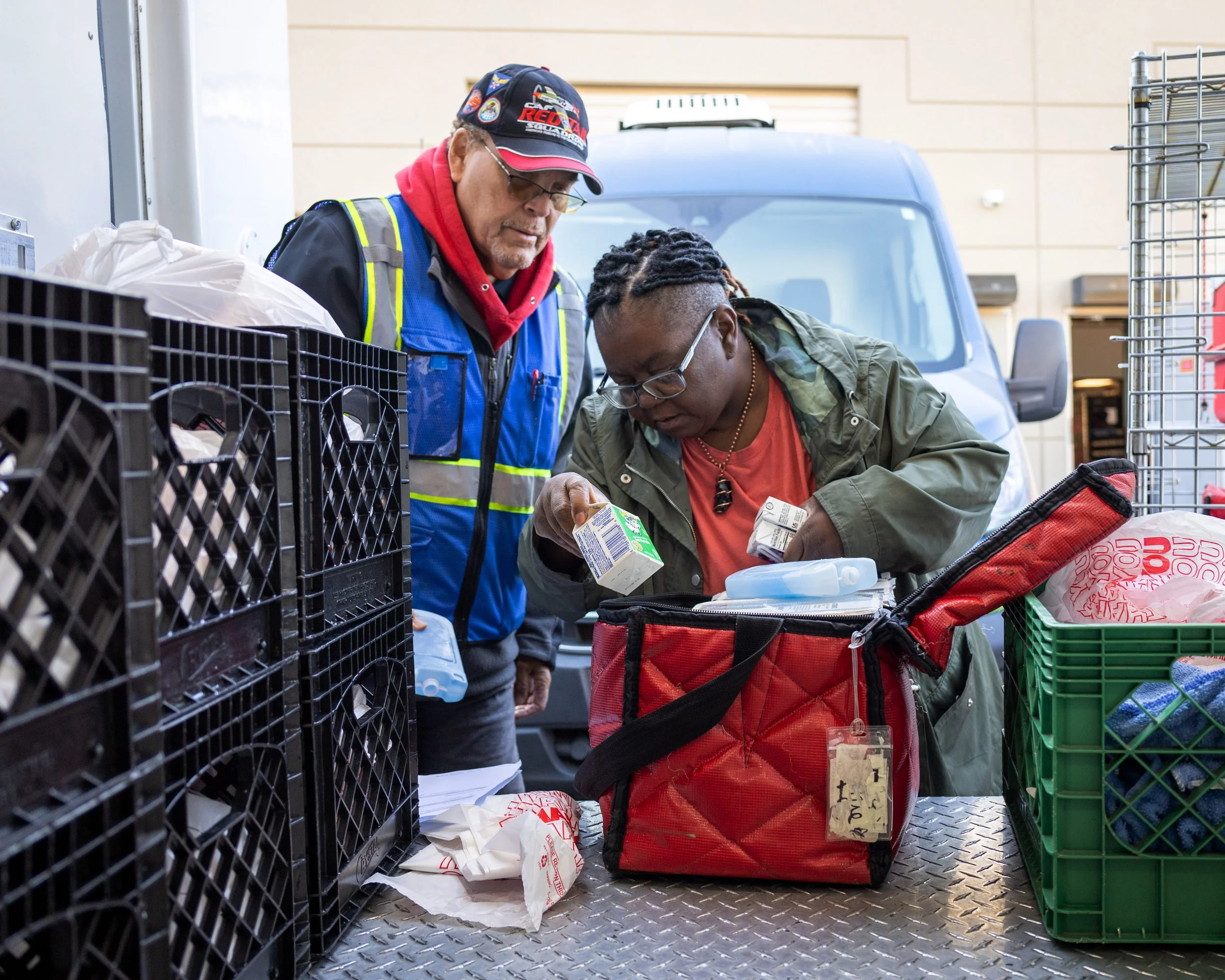
No senior should have to wonder where their next meal will come from. Yet today, countless older adults in our community face that exact uncertainty. Rising costs have stretched budgets to the breaking point, while proposed cuts to Medicaid and SNAP threaten to sever the lifelines many depend on. For homebound seniors, this crisis is not abstract—it is a daily, desperate struggle.
But here in Alameda County, local partners are stepping forward with solutions that meet our most vulnerable neighbors where they are—at their own front doors.
This fall, when those cuts to vital programs like SNAP were put into action, Alameda County announced a plan to provide $10 million to fight food insecurity and fill gaps in support that suddenly arose. Through our advocacy as part of a broader coalition, we urged the county to direct a portion toward seniors—individuals with specific dietary needs, and those who cannot travel to pantries, $1.7 million of that funding was allocated to senior nutrition programs. $910,000 of that money is coming to SOS, to ensure that Meals on Wheels services are available for all who need them, and to provide additional meals to our most food insecure clients.
Philanthropic Ventures Foundation also stepped forward with $15,000 for emergency meals, supporting the same effort. This model is not new to us. From 2021 to 2024, funding from the Crescent Porter Hale Foundation allowed us to pilot a similar program, providing life-saving nutrition for recipients, and improving our learnings around emergency response.
These investments arrive at a moment of acute crisis. The recent government shutdown exacerbated food insecurity among those we serve. Even prior to October 1, we saw sharp increases in demand. Now, new clients are seeking service while existing clients face reductions in the federal programs they rely on to survive.
The seniors we serve are homebound, medically frail, disabled, and often lack caregiving support. Ninety-four percent are low or extremely low income per HUD definitions. In our 2025 survey, 49% worried about affording food, and 32% ran out without means to get more. Ninety-six percent rely on SNAP, CalFresh, SSD, or SSI. Yet nationally, 13 million older Americans are threatened by hunger, and only 1% of philanthropic giving goes to senior causes.
While food banks have responded heroically, their resources remain inaccessible to our clients. Homebound seniors cannot drive, lack transportation, cannot stand in lines, or carry heavy bags. For many, physical or cognitive issues make cooking impossible. Seniors also have unique nutritional needs—fewer calories but more protein and fiber to maintain independence.
Increasing meal production and leveraging our delivery infrastructure is the fastest way this population can see an immediate increase in food access. In emergencies, direct response capacity matters. We are the only agency in our service area with the operational ability to immediately respond to all eligible homebound seniors.
Still, even this expanded service is not enough. The standard Meals on Wheels model—one meal per day—is antiquated. Our long-term vision is to evolve beyond it. Through deeper data-gathering and client-centered funding, we aim to fully meet the needs of every senior who depends on us. Because food security is not a luxury. It is a promise we intend to keep.